
EU MDR · Annex VIII · 22 rules
How to determine a medical device class
A device class is not chosen from the product name. It follows from the intended purpose and every applicable MDR rule.
Classification determines the conformity assessment route, whether a Notified Body must be involved and how deeply an external assessor reviews the device. Two Class I devices can follow different procedures, while a small change to the intended purpose can move a product into a higher class.
Work through the classification ↓- 01INPUT
Intended purpose and mode of action
- 02CHARACTERISTICS
Invasiveness, duration and active status
- 03RULES
Every applicable provision from 1 to 22
- 04RESULT
The highest resulting class
When to determine the class
At the beginning of development, not just before submission
Until the class is known, the manufacturer cannot reliably select the conformity assessment route, determine whether a Notified Body is required or plan the evidence package.
Preliminary classification should begin as soon as the intended purpose is sufficiently specific. It should define the medical purpose, patients, users, indications, contraindications, anatomical site, duration and environment of use, and the device’s mode of action.
The decision must be reconsidered when the intended purpose, design or mode of use changes. A new software function, another route of administration, longer contact or use in the central circulatory system can activate a different rule and change the class.
Fix the intended purpose and classification characteristics first. Apply Annex VIII only after that. Choosing a class to fit a preferred budget creates contradictions between the labelling, clinical evaluation, risk management and technical documentation.
Classification principles
The MDR links risk to purpose and operation, not to the product name
Article 51 divides devices into Classes I, IIa, IIb and III. The actual decision is made under Annex VIII, including its definitions, implementing rules and every relevant classification rule.
Intended purpose
The medical purpose of the device, the target population and the conditions of use.
Invasiveness
Whether the device enters the body, through which route and whether entry is surgical.
Duration
Transient use under 60 minutes, short-term use from 60 minutes to 30 days or long-term use over 30 days.
Active operation
Whether operation depends on energy other than that generated by the human body or gravity.
Anatomical site
Direct contact with the heart, central circulatory system or central nervous system can raise the class.
Special action
Medicinal substances, biological effects, nanomaterials, contraception or software-driven decisions.
Low risk
Ordinary Class I generally permits self-assessment. For Is, Im and Ir, a Notified Body assesses only the relevant special aspects.
Moderate risk
A Notified Body participates in conformity assessment. The technical-documentation review depends on the chosen route and device group.
Higher risk
Notified Body involvement and a more extensive assessment of the quality system and technical documentation are required.
High risk
The strictest route applies, including Notified Body assessment and additional procedures for certain devices.
Is, Im and Ir are not separate risk classes. They identify Class I devices placed on the market in sterile condition, devices with a measuring function and reusable surgical instruments. Ordinary Class I follows the simpler route, not the more demanding one.
The 22 rules in Annex VIII
Every applicable rule must be checked
The rules are arranged in four groups. You can begin with the group matching the device design, but you cannot stop at the first apparent match.
Contact without entry
These rules address contact with injured skin or mucosa and the channelling, storage or modification of blood, liquids, cells and tissues.
Body orifices, surgery and implantation
The outcome depends on the route of entry, duration, anatomical site and the specific exceptions in each rule.
Energy, monitoring and software
These rules cover therapeutic action, diagnosis, monitoring, administration or removal of substances and the effect of information on decisions.
Categories with particular risks
Medicinal substances, contraception, disinfection, tissues, nanomaterials, substance-based devices and closed-loop systems.
- 01FIX
Write one precise intended purpose
Define the medical purpose, users, patients, anatomical site, environment and duration of use.
- 02QUALIFY
Confirm that the product falls under the MDR
Determine separately whether it is a medical device, an accessory or a product without an intended medical purpose listed in Annex XVI.
- 03CHARACTERISE
Record the classification characteristics
Address invasiveness, duration, active status, implantation, critical anatomical sites, software functions and special substances.
- 04APPLY
Test every potentially relevant rule
For every accepted and rejected rule, retain a short rationale tied to the intended purpose and design.
- 05COMPARE
Select the strictest result
If several rules or sub-rules apply, the final result is the provision leading to the higher class.
- 06DOCUMENT
Connect the class to the regulatory route
Record the rule, sub-rule, class, any special Class I category and the effect on conformity assessment.
Software requires a separate analysis
Software providing information used for diagnostic or therapeutic decisions is generally Class IIa. If an incorrect decision could cause death or irreversible deterioration of health, it is Class III; if it could cause serious deterioration of health or require surgical intervention, it is Class IIb. Software monitoring physiological processes is generally IIa, except monitoring of vital parameters where variations could result in immediate danger, which is IIb. Other medical device software is Class I.
Worked examples
The same class can still mean two different routes
The original article examples are retained below. Each conclusion is valid only for the stated assumptions. A change to the purpose, design, sterile status or reuse conditions requires a new analysis.
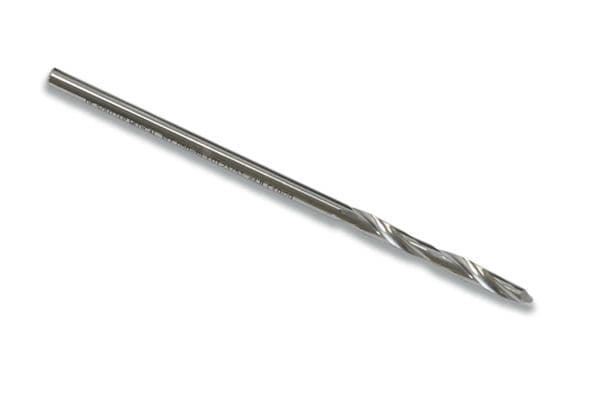
Reusable surgical drill bit
Assume that this is a non-active drill bit that surgically penetrates to bone, is used for less than 60 minutes, is supplied non-sterile and is intended for repeated use after appropriate reprocessing.
- 01
Rules 1–4 for non-invasive devices do not determine the result because the drill bit is surgically invasive.
- 02
Rule 5 addresses entry through a body orifice and does not fit this mode of use.
- 03
Under Rule 6, a surgically invasive device for transient use is normally Class IIa.
- 04
The Rule 6 exception places a reusable surgical instrument in Class I.
- 05
If no other rule produces a higher class, the result is Class I in the special Ir category.
A single-use drill bit does not qualify for the reusable-instrument exception and will generally be IIa under Rule 6. For Ir, a Notified Body assesses the reuse-related aspects. Sterile supply additionally brings sterile aspects into its scope. The active drive unit is classified separately.

Mass-produced orthotic insole
Assume that the insole is a mass-produced, non-sterile device that contacts intact skin only, has no measuring function and contains no active components.
- 01
The device does not enter the body and is non-invasive.
- 02
Rule 1 places non-invasive devices in Class I unless Rule 2, 3 or 4 applies.
- 03
Under the stated characteristics, the later rules do not produce a higher class.
- 04
The result is ordinary Class I without an Is, Im or Ir designation.
- 05
The manufacturer normally self-assesses conformity, draws up the EU declaration of conformity and affixes the CE marking without a Notified Body.
An individually manufactured insole may qualify for the custom-made-device route and would not bear the CE marking. Sensors, a measuring function, active correction or a different intended purpose require separate qualification and classification.
Reusable surgical drill bit
Class I, Rule 6, IrMass-produced orthotic insole
Class I, Rule 1Ir requires limited Notified Body involvement. Ordinary Class I generally follows self-assessment.
Conclusion
A sound classification rationale can be checked line by line
The final class must follow from the intended purpose, classification characteristics and a specific rule—not from the commercial product name or a preferred regulatory route.
The technical documentation should retain the applicable version of the intended purpose, the relevant Annex VIII definitions, the rules considered, the reasons for applying or rejecting them, the resulting class and the conclusion on conformity assessment. If the facts change, reassess the rationale before releasing the change.
Practical questions
What most often changes the classification result
Open the question that applies to your device, intended purpose or conformity assessment route.
Who determines the class of a medical device?+
The manufacturer determines the class and documents the rationale in the technical documentation. A Notified Body reviews that rationale when it participates in the conformity assessment, but it does not replace the manufacturer’s decision. A dispute concerning application of Annex VIII is referred to the competent authority under Article 51 MDR.
Can I use the class of a similar device or its FDA classification?+
No. The MDR class must be established for the specific intended purpose, design and mode of use of the device by applying Annex VIII. A classification from another jurisdiction or the class used by a similar product may provide useful background, but it is not the classification rationale for the EU.
Can I stop after finding the first applicable rule?+
No. Every rule that could apply to the device must be considered. If several rules or several sub-rules apply, the provision resulting in the higher class governs. If a device has several intended purposes, classification is based on the most critical intended purpose.
Are Is, Im and Ir separate risk classes?+
No. They are Class I devices with special characteristics: devices placed on the market in sterile condition, devices with a measuring function and reusable surgical instruments. They remain Class I, but a Notified Body assesses the relevant special aspects.
How is medical device software classified?+
Standalone medical device software is classified according to its intended purpose, particularly under Rule 11. Software providing information used for diagnostic or therapeutic decisions is usually at least Class IIa, and can be IIb or III when an incorrect decision could have serious consequences. Software that only stores, archives or transfers data without performing a medical action may not be a medical device at all.
Can a change to the intended purpose change the class?+
Yes. New indications, a different patient population, anatomical site, duration of use, route of administration, or diagnostic or therapeutic importance of an output can activate another rule or a stricter sub-rule. Classification should be reassessed before the change is approved.
Primary sources
Check the decision against the current MDR
MDCG guidance helps manufacturers apply the rules, but it does not replace the legally binding text of the Regulation.
Confirm the route before certification begins
Need to justify the class of a specific device?
MDRC can review the intended purpose and design, apply the Annex VIII rules, prepare the documented classification rationale and connect the result to the correct conformity assessment route.


