
MDR · Classification · Conformity assessment
CE marking medical devices through practical examples
As a rule, a medical device placed on the EU market must bear the CE marking. To qualify, it must comply with European medical-device legislation, principally Regulation (EU) 2017/745.
Achieving conformity is a multi-stage process involving the device, its supporting documentation and the manufacturer. Only after establishing conformity may the manufacturer affix the CE marking.
The regulatory procedure depends on the device class and becomes more demanding as the associated risk increases. The higher the class, the greater the notified body’s role in assessing MDR conformity.
Follow the route ↓The general principle
CE marking reflects continuously maintained MDR conformity, not a one-time check
MDR conformity is not merely a result achieved once by the manufacturer. It is a continuing process that must be established and maintained throughout the device lifecycle. The CE marking reflects that process.
The first step towards the European market is determining the medical device’s risk class. Every later stage depends on that classification. Devices in all classes pass through the same main regulatory elements, but each element differs in depth and evidence requirements.
The higher the device class, the more complex, time-consuming and costly the processes for establishing MDR conformity and earning the right to affix the CE marking.
Non-sterile class I devices without a measuring function that are not reusable surgical instruments stand somewhat apart. Their regulatory route is simpler, shorter and less expensive. The manufacturer can market them in the EU without a notified body.
This does not exempt a class I device from the MDR. The manufacturer must maintain a proportionate QMS and technical documentation and meet the requirements for clinical evaluation, risk management, PMS, vigilance, UDI and registration. A manufacturer outside the EU must also appoint an authorised representative.
Classes Is, Im and Ir, as well as IIa, IIb and III, require a notified body. Its involvement depends on the class. For sterile class I devices, class I devices with a measuring function and reusable surgical instruments, the scope is limited to the relevant special aspects. For class III, it becomes substantially broader.
Self-declaration does not exempt the manufacturer from a QMS, risk management, clinical evaluation, technical documentation under Annexes II and III, PMS, vigilance, UDI, the EU declaration of conformity or registration. A non-EU manufacturer also needs an authorised representative. Since 28 May 2026, the EUDAMED Actor and UDI/Device registration modules have been mandatory.
Examples 01 and 02
One device type, but two routes because of sterility
A non-sterile swab and a sterile nasopharyngeal swab may both be class I, but the Is designation requires notified-body involvement for sterility-related aspects.
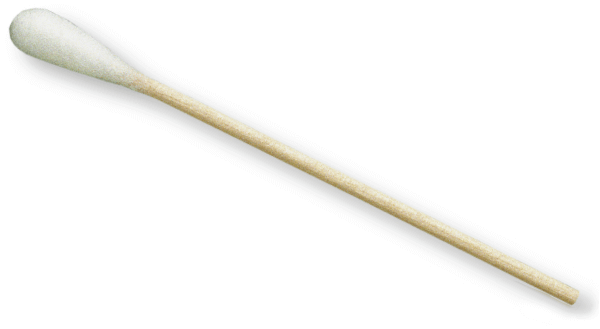
Class I · Self-declaration
Non-sterile swab
Consider a simple medical device — a non-sterile swab. Applying Annex VIII of the MDR, the device falls into class I under Rule 1, 4 or 5, depending on the intended purpose defined by the manufacturer.
It is not sterile, does not perform a measuring function and is not a reusable surgical instrument. It therefore follows the simplest regulatory procedure — self-declaration without a notified body.
The manufacturer confirms conformity itself, but only after completing every applicable MDR requirement, drawing up the EU declaration of conformity, registering itself and the device, and then affixing the CE marking.
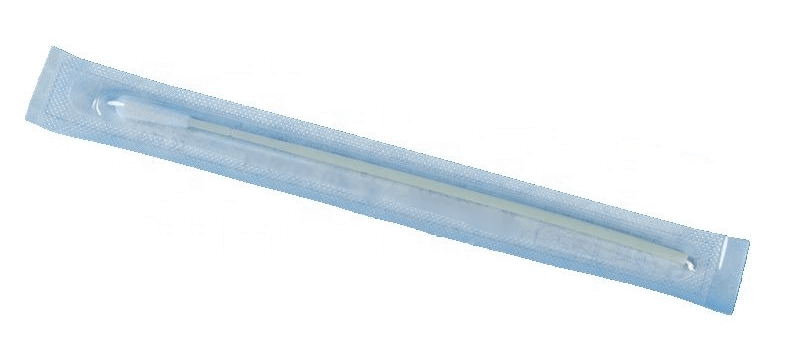
Class Is · Sterility oversight
Sterile nasopharyngeal swab
A nasopharyngeal swab is essentially the same type of swab and is also class I under Rule 5. However, it is supplied sterile, so the regulatory route becomes more demanding.
A notified body must take part in the MDR conformity assessment. Because the product remains class I, its involvement is limited to aspects concerned with establishing, securing and maintaining sterile conditions.
The notified body assesses the relevant part of the QMS and the sterility processes. The manufacturer remains responsible for every other MDR obligation applicable to the device.
Examples 03 and 04
For classes IIa and IIb, the notified body assesses the QMS and sampled technical documentation
Under the Annex IX route, class IIa requires assessment of at least one representative device per device category, while class IIb requires at least one representative device per generic device group.
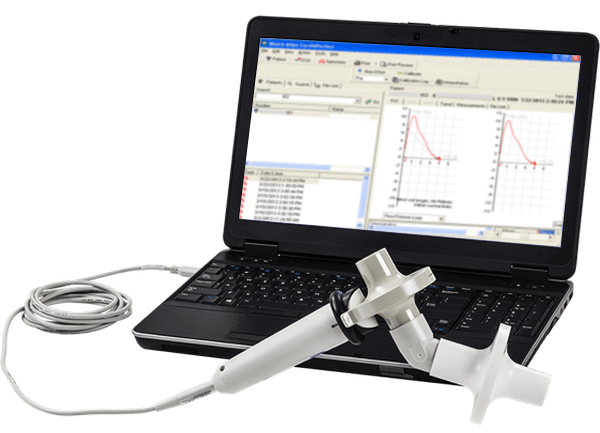
Class IIa · Rule 10
A computer-connected spirometer
The regulatory process is more demanding for a class IIa medical device, and the notified body takes a more active role. A conventional active spirometer, including one connected to a computer through a USB port, is an example. When intended to diagnose or monitor physiological processes, it is generally class IIa under Rule 10.
When assessing the product, its documentation and the manufacturer, the notified body examines the QMS and technical documentation. Under the Annex IX route, it assesses at least one representative device for each class IIa device category.
The manufacturer’s declaration alone is no longer sufficient. A certificate from the notified body is required under the selected conformity-assessment route before the CE marking can be affixed.
Class IIb · Contraception and prevention of STI transmission
A device for contraception or preventing transmission of infection
A class IIb manufacturer faces a more stringent assessment. Devices used for contraception or preventing the transmission of sexually transmitted diseases are an example. Rule 15 places them in class IIb, unless they are implantable or long-term invasive devices, in which case they are class III.
For class IIb, the notified body assesses the QMS, clinical evidence, risk management and PMS. Under the Annex IX route, it assesses the technical documentation for at least one representative device per generic device group.
As risk increases, consistency between the intended purpose, classification, clinical claims, safety and performance evidence and post-market surveillance programme becomes increasingly important.
Example 05
For class III, the technical documentation and clinical evidence receive particularly detailed scrutiny
Under the Annex IX route, the notified body assesses the technical documentation for every class III device rather than a representative sample.
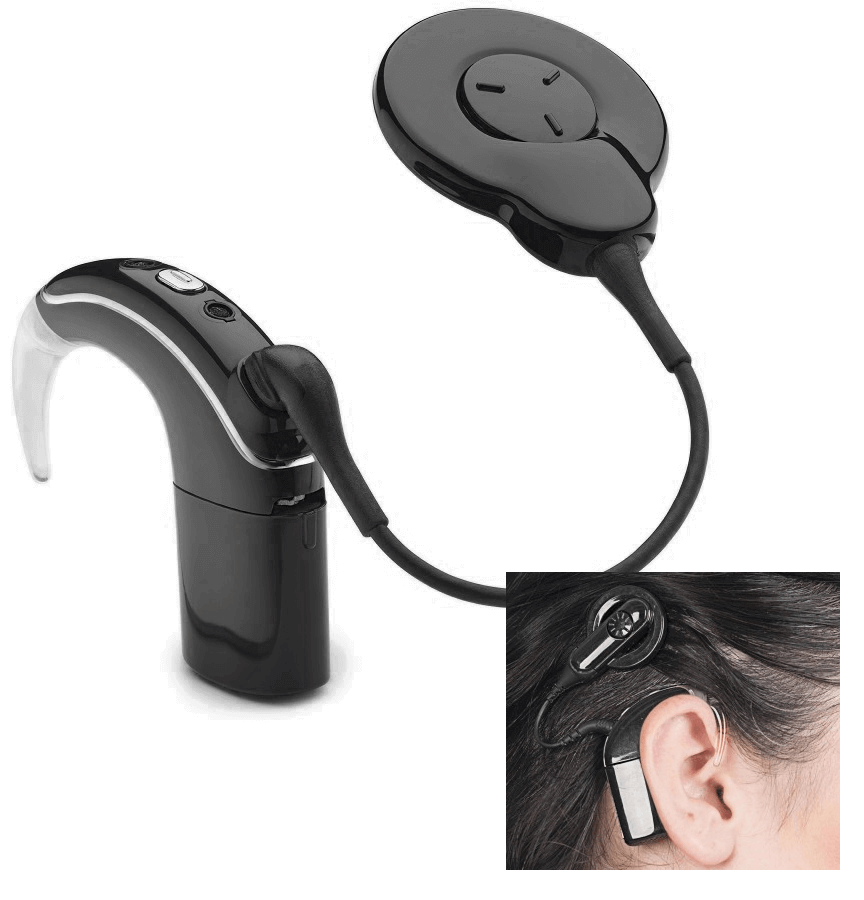
Class III · Active implantable device
Cochlear implant
Finally, class III manufacturers face the strictest scrutiny. Consider a cochlear implant. It is an active implantable medical device classified as class III under Rule 8.
The notified body examines the manufacturer’s QMS and the device technical documentation in depth. Particular attention goes to the clinical evaluation plan and report and the pre-clinical and clinical data included in Section 6 of MDR Annex II.
Clinical investigations are generally mandatory for implantable and class III devices. The MDR provides specific exceptions, but their applicability must be justified separately under Article 61.
PMS, the periodic safety update report, PMCF, vigilance and the timely return of new clinical data into clinical evaluation and risk management become central controls.
Practical conclusion
CE marking starts with the intended purpose, not with choosing a certificate
Devices that look alike may receive different classifications because of their intended purpose, sterility, duration of use or mode of action. An error in the initial classification changes the entire route that follows.
Fix the intended purpose
The user, patient, indications, contraindications, use environment and mode of action determine the applicable rules.
Justify the class
Link the classification to a specific Annex VIII rule and retain the rationale in the technical documentation.
Choose the route
The class and device characteristics determine notified-body involvement and the scope of technical-documentation assessment.
Maintain conformity
Changes, clinical data, PMS and vigilance must continuously update the technical file and the manufacturer’s decisions.
The authorised representative does not replace the manufacturer and is not a general substitute for a notified body
A manufacturer without a registered place of business in the EU appoints a sole authorised representative. The representative performs the tasks in its written mandate, verifies the required MDR documentation and registrations and cooperates with authorities. If the manufacturer has not complied with Article 10, the representative may be jointly and severally liable with it for a defective device under Article 11(5).
Regulatory basis
Check the route against the current MDR text
The intended purpose and the applicable Annex VIII rule determine the class. Article 52 and the relevant annexes determine the conformity-assessment route.
Start with the right question
Need to determine the device class and CE-marking route?
MDRC can review the intended purpose and classification, determine the applicable conformity-assessment route, create a technical-documentation plan and prepare the manufacturer for notified-body assessment.


